Table of Contents
ToggleIntroduction: Understanding 5G Technology
5G technology represents the most significant leap in wireless communication since the introduction of mobile internet. More than just faster smartphones, 5G is a foundational infrastructure designed to support a hyper-connected world where people, machines, and systems communicate in real time.
As industries accelerate digital transformation, connectivity has become a critical enabler of innovation. 5G technology is redefining how data is transmitted, enabling applications that were previously impractical or impossible, such as autonomous vehicles, remote surgery, smart cities, and massive Internet of Things (IoT) deployments.
Unlike previous generations, 5G was designed with enterprise, industrial, and societal use cases in mind. Its global rollout is reshaping economies, industries, and daily life, making it one of the most transformative technologies of the decade.
Internal link:
Digital Transformation: How Tech Is Shaping Modern Businesses
What Is 5G Technology?
5G technology is the fifth generation of mobile network standards developed by the 3rd Generation Partnership Project (3GPP). It succeeds 4G LTE and introduces major improvements in speed, latency, capacity, and reliability.
Core Characteristics of 5G Technology
Ultra-high data speeds (up to 10 Gbps in ideal conditions)
Ultra-low latency (as low as 1 millisecond)
Massive device connectivity (up to 1 million devices per km²)
High reliability and availability
These characteristics make 5G suitable not only for consumer applications but also for mission-critical and industrial use cases.
Unlike previous generations focused primarily on mobile broadband, 5G technology supports three main service categories:
Enhanced Mobile Broadband (eMBB)
Ultra-Reliable Low-Latency Communications (URLLC)
Massive Machine-Type Communications (mMTC)
How 5G Works: Key Technical Components
Understanding how 5G technology works requires examining the technical innovations that differentiate it from 4G.
Spectrum and Frequency Bands
5G operates across three main frequency ranges:
Low-Band Spectrum
Wide coverage
Moderate speeds
Ideal for rural and suburban areas
Mid-Band Spectrum
Balance between speed and coverage
Backbone of most national 5G networks
High-Band (mmWave)
Extremely high speeds
Very low latency
Limited range and penetration
This flexible spectrum strategy allows operators to tailor networks to specific geographic and use-case requirements.
Network Architecture
5G introduces a cloud-native, software-defined network architecture.
Key components include:
Network slicing
Edge computing
Virtualized network functions (NFV)
Network slicing allows operators to create multiple virtual networks on the same physical infrastructure, each optimized for specific use cases such as healthcare, manufacturing, or autonomous transport.
Internal link:
Cloud Computing Trends 2025: What Businesses Should Prepare For
Latency and Speed Improvements
Latency is one of the most critical improvements in 5G technology.
4G latency: ~30–50 ms
5G latency: ~1–10 ms
This reduction enables real-time communication and control, essential for applications like:
Remote surgery
Autonomous vehicles
Industrial automation
5G vs 4G LTE: What Really Changed?
While many consumers associate 5G solely with faster downloads, the transformation goes much deeper.
| Feature | 4G LTE | 5G Technology |
|---|---|---|
| Peak Speed | ~1 Gbps | Up to 10 Gbps |
| Latency | 30–50 ms | 1–10 ms |
| Device Density | ~100k/km² | 1M/km² |
| Network Architecture | Hardware-centric | Cloud-native |
5G technology is fundamentally designed for a connected ecosystem, not just smartphones.
Global Deployment of 5G Technology
5G Rollout by Region
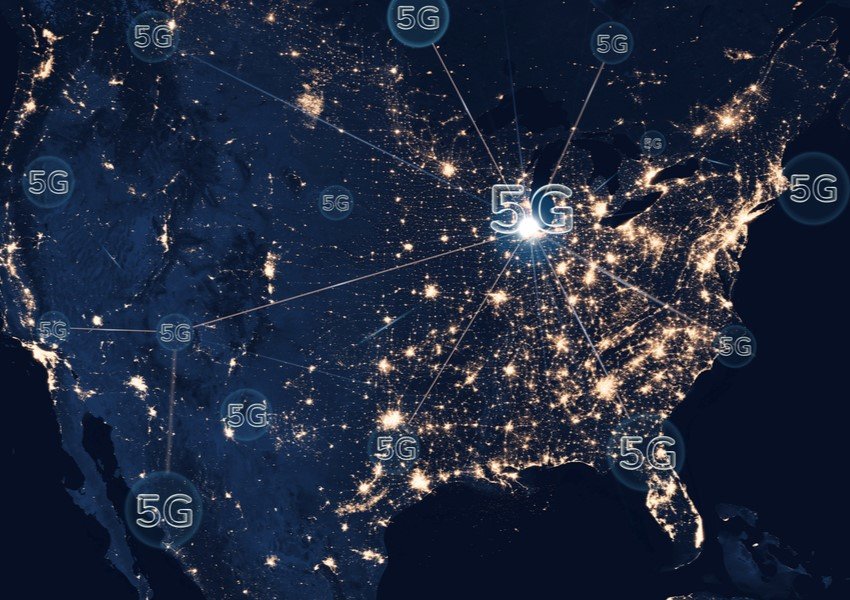
5G technology deployment varies significantly across regions.
Asia-Pacific: Early adoption led by China, South Korea, and Japan
North America: Rapid deployment focused on urban areas and enterprises
Europe: Gradual rollout with strong regulatory oversight
Africa & Latin America: Emerging adoption driven by economic and infrastructure factors
China currently leads in the number of 5G base stations deployed globally, accelerating digital infrastructure development.
Role of Governments and Regulators
Governments play a crucial role in:
Spectrum allocation
Infrastructure investment
Security and compliance standards
Public-private partnerships are accelerating national 5G strategies, particularly for smart cities and industrial digitization.
Key Benefits of 5G Technology
Economic Growth and Innovation
5G technology is expected to contribute trillions of dollars to the global economy over the next decade by enabling:
New digital services
Productivity gains
Innovation ecosystems
Enabling Emerging Technologies
5G acts as a catalyst for:
Artificial intelligence
Internet of Things (IoT)
Augmented and virtual reality
Autonomous systems
Internal link:
AI-Powered Marketplaces: Transforming E-Commerce
Enhanced User Experience
For consumers, 5G delivers:
Faster downloads and streaming
Lower latency for gaming
More reliable connectivity in crowded areas
Challenges and Limitations of 5G Adoption
Despite its potential, 5G technology faces several challenges:
Infrastructure Costs
Deploying dense networks of small cells and fiber backhaul is capital-intensive.
Coverage Gaps
High-frequency 5G signals have limited range, requiring more infrastructure to ensure coverage.
Security and Privacy Concerns
As networks become software-driven, cybersecurity risks increase.
Internal link:
Cybersecurity for Enterprises: 7 Strategies to Protect Business Assets
5G Technology and Industry Transformation
5G technology is not merely an upgrade to mobile networks; it is a general-purpose technology capable of transforming entire industries. Its ability to deliver ultra-low latency, high reliability, and massive device connectivity makes it essential for real-time, data-intensive, and mission-critical operations.
Unlike previous generations, 5G was designed with enterprise-grade performance in mind. This allows businesses to deploy private networks, edge computing solutions, and intelligent automation at scale.
Internal link:
Digital Transformation: How Tech Is Shaping Modern Businesses
5G in Healthcare: From Telemedicine to Remote Surgery
Healthcare is one of the sectors most profoundly impacted by 5G technology.
Telemedicine and Remote Diagnostics
5G enables:
High-definition video consultations
Real-time patient monitoring
AI-assisted diagnostics
Doctors can analyze large imaging files instantly, improving accuracy and reducing diagnosis time.
Remote Surgery and Robotics
Ultra-low latency is critical for remote surgical procedures. With 5G technology:
Surgeons can operate robotic systems in real time
Network delays are reduced to milliseconds
Precision and safety are significantly improved
These advancements are particularly valuable in underserved or remote regions.
Wearables and Continuous Monitoring
5G-powered medical wearables allow continuous transmission of patient data, enabling proactive care and early intervention.
5G Technology in Manufacturing and Industry 4.0
Smart Factories and Automation
Manufacturing is undergoing a paradigm shift driven by Industry 4.0, and 5G technology is a key enabler.
Benefits include:
Wireless automation replacing fixed cabling
Real-time machine monitoring
Predictive maintenance using AI
Private 5G Networks
Many manufacturers deploy private 5G networks to ensure:
Data security
Low latency
Network reliability
These networks support mission-critical operations such as robotic assembly lines and autonomous vehicles within factories.
Internal link:
Robotic Process Automation: 7 Ways to Boost Business Efficiency
5G and the Internet of Things (IoT)
Massive Machine-Type Communications (mMTC)
5G technology enables the connection of millions of IoT devices within a small geographic area.
Use cases include:
Smart agriculture
Environmental monitoring
Industrial sensors
This scale was not feasible with 4G networks.
Edge Computing and Real-Time Processing
5G works hand-in-hand with edge computing by processing data closer to the source, reducing latency and bandwidth usage.
This is essential for:
Autonomous systems
Real-time analytics
AI-driven decision-making
Internal link:
Cloud Computing Trends 2025: What Businesses Should Prepare For
Smart Cities Powered by 5G Technology
Intelligent Infrastructure
Smart cities rely on 5G technology to connect:
Traffic systems
Energy grids
Public safety infrastructure
These systems improve efficiency, sustainability, and quality of life.
Public Safety and Emergency Response
5G enables:
Real-time video surveillance
Faster emergency response coordination
Improved situational awareness
Low latency and high reliability are critical in emergency scenarios.
Sustainable Urban Development
Smart lighting, waste management, and energy optimization systems powered by 5G reduce environmental impact and operational costs.
5G in Transportation and Autonomous Vehicles
Connected Vehicles
5G technology enables vehicle-to-everything (V2X) communication:
Vehicle-to-vehicle
Vehicle-to-infrastructure
Vehicle-to-pedestrian
This improves traffic safety and efficiency.
Autonomous Driving
Autonomous vehicles depend on:
Ultra-low latency
Real-time data exchange
High network reliability
5G technology provides the connectivity backbone required for safe and scalable deployment.
Internal link:
AI in Cybersecurity 2025: Predicting and Preventing Threats
5G Technology in Media, Entertainment, and Gaming
Immersive Experiences
5G enables:
Cloud gaming
Augmented reality (AR)
Virtual reality (VR)
Users can access high-performance experiences without powerful local hardware.
Live Streaming and Content Creation
Content creators benefit from:
Faster uploads
Higher resolution live streams
Reduced buffering and latency
This democratizes high-quality content production.
Security and Privacy Challenges of 5G Technology
As 5G technology expands globally, it introduces a more complex digital ecosystem that also increases the attack surface for cyber threats.
Expanded Attack Surface
Unlike previous generations, 5G relies on:
Software-defined networking (SDN)
Network function virtualization (NFV)
Cloud-native architectures
While these technologies improve flexibility, they also create new vectors for cyberattacks if not properly secured.
IoT Security Risks
With billions of connected devices, IoT endpoints become attractive targets. Weak authentication, outdated firmware, and lack of encryption can expose entire networks.
Data Privacy and Regulation
5G technology enables massive data collection in real time. This raises concerns around:
User privacy
Data sovereignty
Regulatory compliance (GDPR, HIPAA, etc.)
Organizations must align their 5G strategies with strong governance and compliance frameworks.
Economic Impact of 5G Technology on Global Markets
Contribution to Global GDP
According to multiple economic forecasts, 5G technology is expected to generate trillions of dollars in economic output by enabling new business models and increasing productivity.
Job Creation and Workforce Transformation
5G drives demand for:
Network engineers
Cybersecurity specialists
Data scientists
AI and cloud architects
At the same time, automation powered by 5G may disrupt traditional roles, making reskilling essential.
Internal link:
5 Key Tools Shaping the Future of Remote Work in 2025
Enabling Emerging Markets
Developing economies benefit significantly from wireless infrastructure, as 5G reduces the need for costly wired networks while enabling digital inclusion.
5G Technology and Business Opportunities
New Business Models
5G technology enables:
Network slicing for customized services
Pay-per-use connectivity models
Platform-based ecosystems
These innovations allow telecom operators and enterprises to monetize connectivity beyond traditional data plans.
Competitive Advantage for Early Adopters
Organizations that adopt 5G early gain:
Operational efficiency
Faster innovation cycles
Enhanced customer experiences
Industries such as logistics, finance, healthcare, and retail stand to gain the most.
Internal link:
AI-Powered Marketplaces: Transforming E-Commerce
Private and Hybrid 5G Networks
Enterprises increasingly deploy private 5G networks to maintain control, security, and performance, especially in critical environments.
Challenges and Limitations of Global 5G Deployment
Infrastructure Costs
Deploying 5G requires:
Dense network of small cells
Fiber backhaul
Spectrum licensing
These factors make rollout expensive, especially in rural areas.
Device Compatibility and Adoption
Not all devices support 5G technology. Consumers and businesses must invest in new hardware to fully benefit from the network.
Geopolitical and Regulatory Issues
5G deployment is influenced by:
Spectrum allocation policies
National security concerns
International trade regulations
These factors can slow or fragment global adoption.
5G vs Future Networks: Preparing for 6G
The Path Beyond 5G
While 5G technology is still expanding, research into 6G has already begun. Expected features include:
Terahertz frequencies
AI-native networks
Holographic communications
Why 5G Still Matters Long-Term
5G will remain the foundation for:
Industrial automation
Smart infrastructure
AI-driven services
Its full potential will unfold over the next decade.
What Businesses and Consumers Should Do Now
For Businesses
Assess 5G readiness and use cases
Invest in cybersecurity and edge computing
Train teams for next-generation networks
For Consumers
Upgrade to 5G-compatible devices
Understand privacy and data usage implications
Leverage new services like cloud gaming and smart home solutions
Internal link:
Top Smart Home Gadgets 2025: Full Reviews and Recommendations
Final Conclusion: The Long-Term Impact of 5G Technology
5G technology is redefining how the world connects, communicates, and innovates. Its impact goes far beyond faster mobile internet, serving as the digital backbone for AI, IoT, smart cities, autonomous systems, and future industries.
Organizations and individuals that understand and embrace 5G today will be better positioned to compete, innovate, and thrive in a hyper-connected global economy.

“5G is not just a network upgrade — it is the foundation for the next digital revolution.”
– Aires Candido