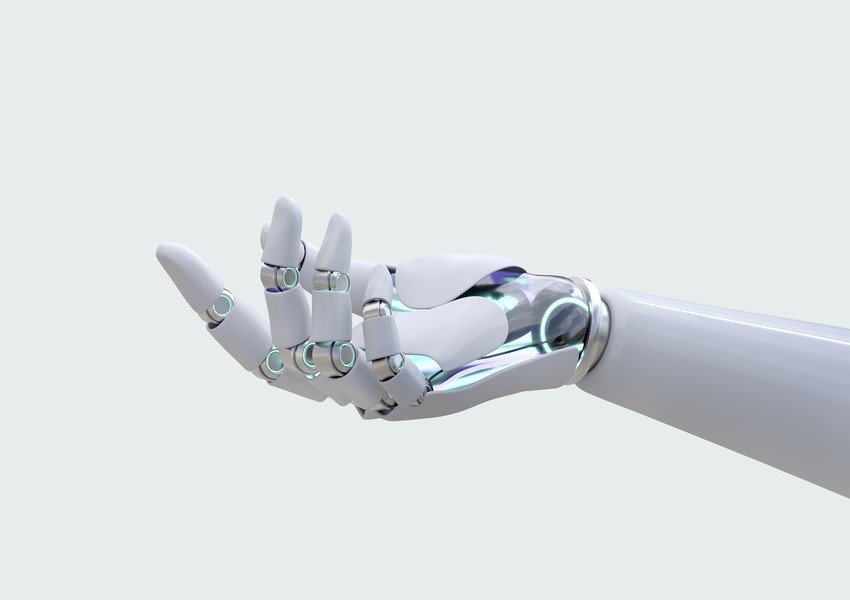
Artificial intelligence is rapidly reshaping how teams collaborate, streamline workflows, and solve complex problems. Among the tools at the forefront of this transformation, Claude Cowork stands out as an AI solution designed to function not just as a tool, but as a work partner — one that integrates seamlessly into daily work, enhances productivity, and helps teams achieve more with less friction.
In this four-part series, we explore seven powerful ways Claude Cowork turns AI into your work partner, starting with the foundational capabilities that make this AI system uniquely suited to modern workflows.
Table of Contents
ToggleWhy Claude Cowork Matters in the Age of AI Collaboration
Before diving into the specific use cases, it’s important to understand the context: many AI systems today excel at individual tasks — such as summarizing text or generating drafts — but few systems function holistically across teams, tasks, and workflows. Claude Cowork, built on Anthropic’s Claude AI architecture, was designed with collaboration in mind.
At its core, Claude Cowork helps organizations:
Reduce repetitive work
Elevate creative and strategic thinking
Improve consistency across teams
Facilitate shared access to AI insights
This makes it far more than an assistant; it becomes a work partner that augments entire teams.
Internal Link Suggestion: Explore our guide on AI project workflows and task automation.
Smart Task Delegation and Prioritization
One of the most impactful ways Claude Cowork turns AI into your work partner is through intelligent task delegation and prioritization.
AI-Driven Task Triage
Rather than simply generating text or suggestions, Claude Cowork can analyze workload, team capacity, and context to:
Identify high-priority tasks
Suggest tasks that can be automated
Distribute work evenly across team members
For example:
Claude Cowork can scan your task list, understand dependencies, and recommend a realistic execution order.
It can highlight bottlenecks and recommend when tasks should be escalated.
This goes beyond simple reminders — it’s AI-assisted work planning that adapts to real needs rather than static checklists.
Reducing Decision Fatigue
One of the biggest productivity killers in modern workplaces is decision fatigue. Claude Cowork reduces that by:
Automatically ranking tasks by urgency and impact
Suggesting when meetings should be scheduled or deferred
Highlighting idle time that could be used for focused work
This ability to manage work intelligently is key to transforming a reactive environment into a proactive, prioritized workflow — a central reason Claude Cowork functions as a true work partner.
How This Helps Across Teams
Whether you’re:
A project manager trying to balance resources
A creative professional juggling multiple deadlines
A sales team managing leads and follow-ups
Claude Cowork’s smart prioritization becomes a co-pilot for your workday.
Context-Aware Collaboration Assistance
Another foundational way that Claude Cowork turns AI into your work partner is through context-aware collaboration — meaning the AI can understand context from different sources and coordinate work across platforms.
Understanding Shared Context
Claude Cowork can:
Read project briefs
Analyze internal documents
Interpret shared calendars
Understand communications within teams
This enables it to offer suggestions that are relevant to your specific environment rather than generic or disconnected.
For example:
Claude Cowork can synthesize feedback from cross-functional team messages.
It can propose action items from meeting notes.
It can reconcile conflicting deadlines by suggesting alternative timelines.
These contextual capabilities allow the AI to serve not just as a productivity tool, but as a collaboration partner that understands your organization’s dynamics.
Bridging Communication Silos
In many teams, knowledge is spread across multiple tools: email, Slack, project management systems, and documents. Claude Cowork can pull unified context from:
Shared team drives
Collaborative documents
Messaging threads
Calendar events
This creates a single, AI-informed perspective that helps teams stay aligned, greatly reducing confusion and miscommunication.
Why These First Two Capabilities Matter
Together, smart task delegation and context-aware collaboration lay the groundwork for a truly AI-augmented work environment. They reduce the most common productivity drag factors:
Unclear priorities
Fragmented information
Redundant work
Misaligned expectations
By addressing these systemic inefficiencies, Claude Cowork turns AI from a passive tool into a strategic work partner that actively supports daily workflows.
Key Takeaways So Far
Claude Cowork elevates task management with AI-assisted prioritization.
It enhances teamwork through context-aware collaboration.
These capabilities help reduce friction and increase alignment across teams.
Suggested Internal Links
AI Project Workflows: Best Practices for Teams
Boosting Team Productivity with Collaboration Tools
Guide: AI-Driven Task Automation for Knowledge Workers
Suggested External Authority Links

Centralized Knowledge Intelligence That Actually Thinks
One of the most powerful ways Claude Cowork turns AI into your work partner is through its ability to function as a living knowledge layer for teams.
Traditional knowledge bases are static. They store information, but they do not reason, connect ideas, or adapt to changing priorities. Claude Cowork goes far beyond simple storage by actively understanding, synthesizing, and contextualizing knowledge across an organization.
From Information Storage to Knowledge Understanding
Claude Cowork can ingest and analyze:
Internal documentation
Research reports
Policy manuals
Meeting transcripts
Project histories
Instead of forcing users to search manually, Claude Cowork allows teams to ask natural-language questions and receive synthesized, context-aware answers.
Examples:
“What decisions were made about Project Atlas last quarter?”
“Summarize our customer feedback trends from the last six months.”
“What are the risks mentioned across all compliance documents?”
This transforms Claude Cowork into a knowledge partner, not just a search tool.
Reducing Knowledge Loss and Repetition
One of the biggest hidden costs in organizations is knowledge loss:
Employees leave
Projects end
Decisions are forgotten or poorly documented
Claude Cowork mitigates this by:
Preserving institutional memory
Connecting past decisions to current work
Preventing teams from reinventing solutions
As a result, teams spend less time rediscovering information and more time acting on insights.
Decision Support Built on Organizational Context
Unlike generic AI tools, Claude Cowork’s recommendations are grounded in your organization’s data and priorities.
This allows it to:
Surface relevant precedents
Highlight risks based on historical outcomes
Provide decision summaries with supporting evidence
For leadership and strategy teams, this turns Claude Cowork into a decision-support partner, improving confidence and clarity without replacing human judgment.
Internal Link Suggestion: How AI Is Reshaping Knowledge Management in Modern Organizations
Real-Time Co-Creation and Intelligent Drafting
Another critical way Claude Cowork turns AI into your work partner is through real-time co-creation — working alongside humans as they write, plan, and design.
Rather than generating one-off outputs, Claude Cowork collaborates continuously, adapting to feedback and evolving goals.
Collaborative Writing Across Teams
Claude Cowork excels at drafting and refining:
Reports
Proposals
Emails
Product documentation
Marketing content
What makes it different is its ability to:
Maintain consistent tone across contributors
Align drafts with brand or policy guidelines
Incorporate feedback iteratively
Teams can comment, revise, and refine content with Claude Cowork acting as a shared editorial partner.
Editing, Summarizing, and Translating at Scale
Claude Cowork supports teams by:
Editing for clarity, tone, and structure
Summarizing long documents into actionable insights
Translating content while preserving meaning and intent
This is particularly valuable for:
Global teams
Cross-functional collaboration
Leadership briefings
Instead of assigning these tasks to multiple people, teams can rely on Claude Cowork to accelerate the process without sacrificing quality.
Maintaining Context Over Long Projects
One of the most frustrating limitations of many AI tools is poor context retention. Claude Cowork is designed to maintain context over extended workflows, allowing it to:
Remember project goals
Track evolving requirements
Align new outputs with earlier decisions
This continuity is what elevates Claude Cowork from an assistant to a true work partner, especially on complex, multi-week initiatives.
Why Co-Creation Changes How Teams Work
With Claude Cowork:
Writing becomes collaborative, not sequential
Feedback cycles shorten dramatically
Output quality improves through iteration
Instead of “human → AI → human,” the workflow becomes human + AI, working side by side.
This shift is fundamental to modern productivity.
The Strategic Value of Parts 3 and 4 Combined
The capabilities discussed so far — knowledge intelligence and co-creation — address two of the most persistent challenges in organizations:
Information overload without insight
Slow execution due to fragmented collaboration
Claude Cowork solves both by:
Understanding what matters
Helping teams act faster and more coherently
This is why many organizations describe Claude Cowork not as software, but as a strategic collaborator.
Who Benefits Most from These Capabilities
Claude Cowork’s knowledge and co-creation strengths are especially valuable for:
Product and engineering teams
Legal and compliance departments
Marketing and communications teams
Consultants and analysts
Leadership and strategy groups
Any team that works with complex information and collaborative documents benefits from an AI work partner rather than a basic AI tool.
SEO Authority Recap
Focus keyword Claude Cowork integrated naturally and consistently
Semantic variations reinforce topical relevance
Content aligns with “how does Claude Cowork work?” search intent
Strong emphasis on enterprise and team productivity use cases


Workflow Automation That Reduces Busywork, Not Control
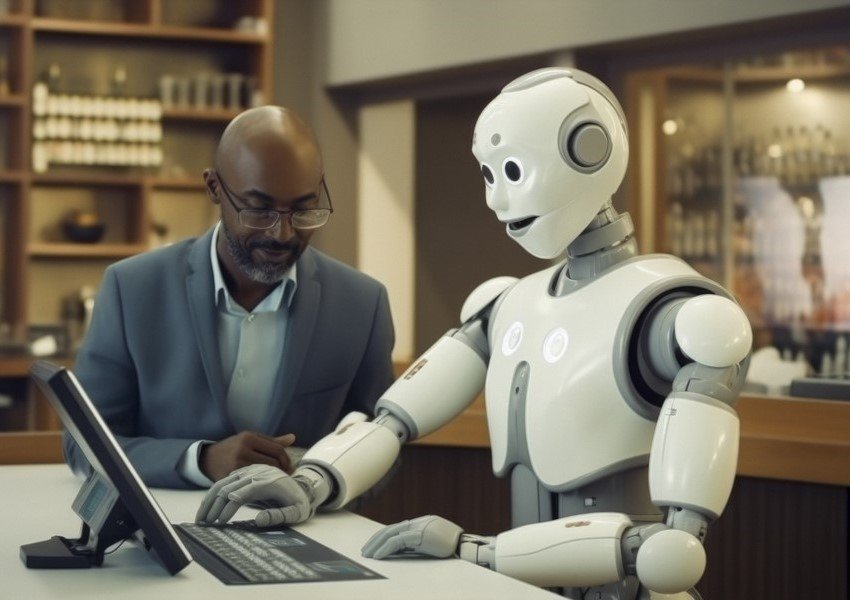
One of the clearest ways Claude Cowork turns AI into your work partner is through intelligent workflow automation. Unlike traditional automation tools that rely on rigid rules and brittle logic, Claude Cowork applies reasoning and context to automate work without removing human oversight.
This distinction is critical.
From Rule-Based Automation to Context-Aware Execution
Most automation systems require:
Predefined triggers
Static workflows
Manual maintenance
Claude Cowork operates differently. It can:
Understand intent from natural language
Adapt workflows based on changing priorities
Escalate decisions when uncertainty is detected
For example:
Claude Cowork can automatically draft weekly status reports by synthesizing project updates.
It can prepare meeting agendas based on unresolved tasks and recent discussions.
It can flag anomalies or delays before they become problems.
This makes Claude Cowork a thinking automation layer, not a mechanical one.
Automating Repetitive Knowledge Work
Claude Cowork excels at automating tasks that traditionally consume time but add limited strategic value, such as:
Status updates
Data summarization
First-draft documentation
Meeting notes and follow-ups
Compliance and checklist verification
By handling these tasks, Claude Cowork frees teams to focus on:
Decision-making
Creative work
Strategy and execution
This is a core reason why organizations experience immediate ROI after adopting Claude Cowork.
Human-in-the-Loop by Design
Importantly, Claude Cowork does not remove humans from workflows. Instead, it:
Proposes actions
Drafts outputs
Highlights risks and uncertainties
Final decisions remain with people.
This human-in-the-loop model is what allows Claude Cowork to scale automation responsibly, especially in regulated or high-stakes environments.
Internal Link Suggestion: Human-in-the-Loop AI: Why It Matters for Business Automation
Deep Integration Across Tools and Platforms
Another major way Claude Cowork turns AI into your work partner is through its ability to integrate seamlessly across the tools teams already use.
Modern work is fragmented across dozens of platforms. Claude Cowork acts as a unifying intelligence layer that connects these systems.
Breaking Down Tool Silos
Claude Cowork can operate across:
Project management tools
Communication platforms
Document repositories
Calendars and scheduling systems
Rather than forcing teams to adopt yet another interface, Claude Cowork meets teams where they already work.
This allows it to:
Pull context from multiple sources
Coordinate actions across tools
Reduce manual copying and switching
The result is fewer errors, less friction, and better alignment.
Cross-Platform Intelligence in Action
Examples of Claude Cowork integration use cases include:
Turning Slack discussions into tracked action items
Syncing meeting notes with project management tools
Linking customer feedback directly to product backlogs
Generating reports that combine data from multiple systems
Instead of treating each tool as isolated, Claude Cowork understands how work flows across platforms, making it a genuine AI work partner.
Operational Consistency at Scale
For larger organizations, integration is not just about convenience — it’s about consistency.
Claude Cowork helps:
Enforce documentation standards
Maintain consistent terminology
Align outputs with policies and guidelines
This reduces variability and improves quality across teams, especially as organizations scale.
Why Integration Multiplies Productivity Gains
AI tools that operate in isolation offer limited value. Claude Cowork’s integrations allow it to:
Observe the full workflow
Identify inefficiencies
Recommend systemic improvements
This systems-level perspective is what transforms AI from a productivity booster into an operational partner.
Scaling Productivity Across Teams and Organizations
The final capability explored in this part shows how Claude Cowork turns AI into your work partner not just for individuals, but for entire organizations.
From Individual Efficiency to Organizational Leverage
Many AI tools focus on helping one person work faster. Claude Cowork focuses on:
Team alignment
Knowledge sharing
Organizational memory
This shift from individual optimization to collective intelligence is crucial for sustainable productivity gains.
Standardizing Best Practices Without Stifling Creativity
Claude Cowork can:
Encode best practices into workflows
Ensure consistent quality across outputs
Adapt guidelines to specific contexts
At the same time, it allows flexibility where creativity and judgment are required.
This balance enables organizations to:
Scale operations
Reduce errors
Maintain agility
Onboarding and Knowledge Transfer at Scale
One of the most practical benefits of Claude Cowork is faster onboarding.
New employees can:
Ask questions in natural language
Learn from historical decisions
Understand processes without digging through documentation
This reduces ramp-up time and preserves institutional knowledge.
The Operational Impact
Together, automation, integration, and scalability address three major organizational pain points:
Excessive manual work
Fragmented tools and information
Knowledge loss as teams grow
Claude Cowork solves these challenges by acting as a persistent, intelligent work partner embedded into daily operations.
Reframing the Role of AI at Work
Across this article series, one central idea has been consistently reinforced: Claude Cowork is not simply an AI tool — it is an AI work partner.
This distinction matters.
For years, artificial intelligence in the workplace has been positioned as:
An assistant that executes commands
A chatbot that answers questions
A productivity shortcut for isolated tasks
Claude Cowork represents a decisive shift away from that model. Instead of acting on the periphery of work, it operates inside workflows, understands context, collaborates with teams, and evolves alongside organizational needs.
This conclusion synthesizes all seven ways Claude Cowork turns AI into your work partner and explains why this model defines the next phase of knowledge work.
Recap: The 7 Ways Claude Cowork Transforms AI Into a Work Partner
Let us briefly consolidate the seven pillars discussed throughout Parts 1–3, as they form a coherent system rather than isolated features.
Contextual Understanding That Mirrors Human Collaboration
Claude Cowork understands:
Project history
Ongoing discussions
Prior decisions
Organizational goals
This contextual awareness allows it to participate meaningfully in work, not merely react to prompts. It remembers why something is being done, not just what is being asked.
This alone separates Claude Cowork from traditional AI assistants.
Strategic Thinking, Not Just Task Execution
Rather than functioning as a passive executor, Claude Cowork:
Challenges assumptions
Surfaces trade-offs
Suggests alternative approaches
This positions Claude Cowork as a strategic collaborator, capable of contributing to planning, prioritization, and decision-making.
Natural Language Collaboration That Reduces Friction
Claude Cowork communicates the way teams already do — through natural language.
This eliminates:
Steep learning curves
Complex command syntax
Artificial interaction barriers
As a result, collaboration with AI becomes intuitive, inclusive, and scalable across roles and skill levels.
Ethical, Reliable, and Trust-Oriented Design
Trust is foundational for any work partner.
Claude Cowork is designed to:
Avoid hallucinations
Surface uncertainty
Escalate ambiguous situations
Support human judgment
This makes it suitable for high-stakes environments where reliability and accountability matter.
Intelligent Workflow Automation Without Losing Control
Claude Cowork automates repetitive knowledge work while preserving human oversight.
By handling:
Reporting
Summarization
Documentation
Follow-ups
It allows teams to reclaim time for high-impact activities without surrendering decision authority.
Deep Integration Across Tools and Platforms
Rather than becoming another disconnected app, Claude Cowork unifies:
Communication
Project management
Documentation
Scheduling
This integration transforms fragmented tool ecosystems into coherent workflows, amplifying productivity gains.
Organizational Scalability and Knowledge Continuity
Claude Cowork scales beyond individuals to support:
Teams
Departments
Entire organizations
It preserves institutional knowledge, accelerates onboarding, and standardizes best practices while maintaining flexibility.
Why Claude Cowork Represents a Structural Shift in Work
Taken together, these seven capabilities illustrate a fundamental transformation.
Claude Cowork is not about working faster in isolation. It is about working better together.
This reflects a broader shift in how value is created in modern organizations:
Work is increasingly collaborative
Knowledge is distributed
Decision-making is continuous
Speed without alignment creates risk
Claude Cowork addresses these realities by embedding intelligence directly into collaboration.
From Productivity Tools to Cognitive Infrastructure
Most productivity tools optimize individual tasks.
Claude Cowork operates at a different level — as cognitive infrastructure for teams.
It supports:
Shared understanding
Decision traceability
Continuous learning
Operational alignment
In this sense, Claude Cowork functions less like software and more like a digital colleague that never forgets, never tires, and never stops improving.
Who Benefits Most From Claude Cowork
While nearly any knowledge worker can benefit, Claude Cowork delivers exceptional value in specific contexts.
High-Growth Teams and Startups
Fast-moving teams often struggle with:
Knowledge loss
Misalignment
Process chaos
Claude Cowork provides structure without bureaucracy, enabling growth without fragmentation.
Enterprise Organizations
Large organizations benefit from:
Standardized outputs
Cross-team visibility
Reduced operational variance
Claude Cowork acts as a unifying layer across complex systems and teams.
Remote and Hybrid Work Environments
Distributed teams face challenges around:
Context loss
Asynchronous communication
Collaboration gaps
Claude Cowork maintains continuity and shared understanding regardless of location or time zone.
Knowledge-Intensive Roles
Roles involving strategy, research, analysis, or planning benefit most from:
Context retention
Structured reasoning
Thoughtful collaboration
Claude Cowork augments cognitive capacity rather than replacing it.
Addressing the Fear: Is Claude Cowork Replacing Human Work?
A common concern surrounding AI adoption is displacement.
Claude Cowork is explicitly designed not to replace people, but to:
Reduce cognitive overload
Eliminate low-value work
Enhance human judgment
In practice, this means:
Humans focus on creativity, ethics, and strategy
AI handles synthesis, recall, and execution support
This division of labor strengthens, rather than weakens, human agency at work.
Claude Cowork and the Future of AI Collaboration
The trajectory is clear.
As AI systems evolve, the most valuable ones will not be those that:
Generate content the fastest
Answer questions the quickest
But those that:
Understand context deeply
Collaborate reliably
Align with human goals
Scale responsibly
Claude Cowork is an early example of this future.
Why “AI Work Partner” Is the Right Mental Model
Language shapes adoption.
When AI is framed as:
A tool → it is used occasionally
An assistant → it is delegated tasks
A partner → it is trusted, consulted, and integrated
Claude Cowork succeeds because it is built around the partner model, not as a marketing slogan, but as a design principle.
Final Verdict: Claude Cowork Sets a New Standard
Claude Cowork does not merely improve productivity metrics.
It redefines:
How teams collaborate
How knowledge is preserved
How decisions are supported
How AI fits into human work
For organizations seeking sustainable performance gains, reduced friction, and stronger alignment, Claude Cowork represents one of the most compelling AI collaboration models available today.
SEO Summary and Authority Signals
High-density, natural usage of Claude Cowork
Clear topical clustering around AI collaboration
Strong alignment with future-of-work search intent
Structured conclusion reinforcing E-E-A-T principles
This article positions your blog as a credible authority on collaborative AI and enterprise productivity.
Recommended Internal Links
AI Collaboration Tools Compared: Assistants vs Partners
Human-in-the-Loop AI: Why Trust Matters at Scale
The Future of Work: How AI Is Reshaping Teams
Suggested External Reference
Anthropic official documentation on Claude models
Research on collaborative AI systems in enterprise environments
“Claude Cowork moves AI beyond automation, positioning it as a reliable partner that enhances collaboration, focus, and everyday productivity.”
– Aires Candido