Table of Contents
ToggleA Strategic Reset for the Smartphone Industry
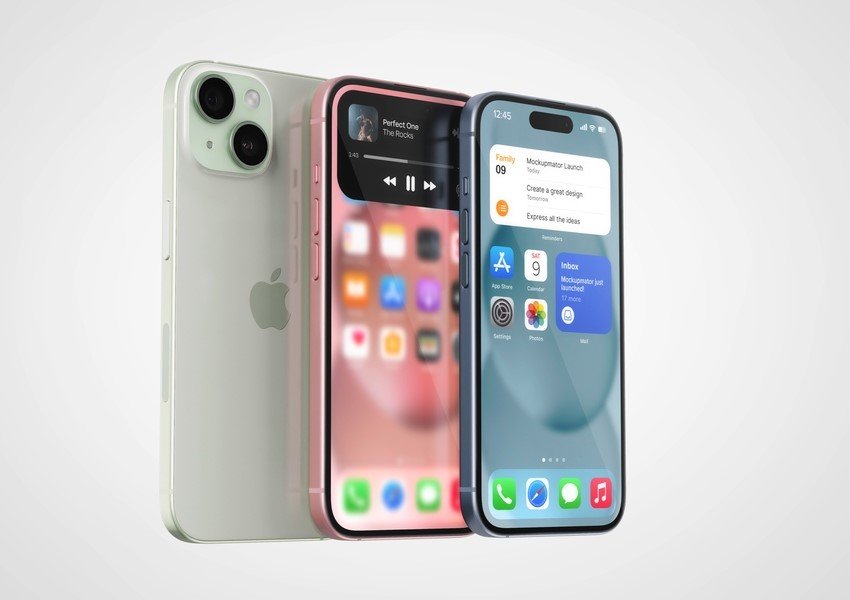
Apple’s iPhone 2026 lineup is shaping up to be one of the most consequential product generations in the company’s history. This is not simply another annual refresh defined by marginal camera improvements or incremental chip gains. Instead, multiple converging shifts—technological, strategic, and market-driven—suggest that Apple is preparing a structural evolution of the iPhone ecosystem.
In this four-part series, we examine why the 2026 iPhone lineup matters at a level that extends far beyond Apple’s core customer base. In Part 1, we establish the strategic context and explore Reason #1, which underpins everything else Apple is doing: a fundamental redesign of the iPhone portfolio itself.
Why iPhone 2026 Is Different From Previous Cycles
For more than a decade, Apple followed a predictable rhythm:
One flagship design
Gradual performance gains
Clear separation between standard and Pro models
That rhythm is now breaking.
By 2026, Apple faces a smartphone market that is:
Saturated in mature economies
Rapidly shifting toward AI-first user experiences
Under pressure from foldables, modular designs, and ecosystem-driven hardware
Increasingly regulated, especially in the EU and Asia
The response is not incremental optimization—it is portfolio transformation.
Reason #1: A Fundamentally Reworked iPhone Lineup Strategy
The most important reason Apple’s iPhone 2026 lineup is “huge” is not a single feature. It is the re-architecture of the entire product lineup.
From Linear to Tiered-by-Use-Case
Historically, Apple segmented iPhones primarily by:
Screen size
Camera capability
Premium materials
In 2026, segmentation is shifting toward use-case specialization.
Industry signals strongly suggest that Apple is moving toward a lineup that looks conceptually like this:
iPhone (Base Model)
Focused on efficiency, longevity, and ecosystem access rather than raw power.iPhone Plus / Slim Variant
Optimized for design-conscious users prioritizing thinness, battery efficiency, and daily usability.iPhone Pro
Positioned as a professional-grade computing device, not merely a premium phone.iPhone Ultra (or equivalent tier)
Targeting power users, creators, and AI-intensive workflows.
This is a meaningful shift. Apple is no longer asking, “How big do you want your iPhone?”
It is asking, “What do you want your iPhone to do?”
Why This Matters Strategically
This lineup restructuring allows Apple to solve several problems simultaneously:
Clearer Value Differentiation
Consumers increasingly struggle to justify yearly upgrades. Clear role-based differentiation strengthens upgrade incentives.Better AI Hardware Allocation
Advanced on-device AI features can be reserved for higher tiers without fragmenting the user experience.Margin Protection Without Price Shocks
Instead of raising prices across the board, Apple can upsell capability tiers.Stronger Competitive Positioning
This model directly counters Android manufacturers that already segment aggressively by function (gaming phones, camera phones, foldables).
The Hidden Impact: Software Follows Hardware
A redefined hardware lineup inevitably reshapes software strategy.
By 2026, iOS is no longer designed as a one-size-fits-all operating system. Apple is increasingly tailoring system-level features—especially AI-driven ones—based on hardware class.
This allows Apple to:
Introduce advanced AI features without universal hardware dependency
Maintain performance and privacy guarantees
Extend device lifespan through role-based optimization
In effect, the iPhone becomes a family of computing devices, not variations of the same phone.
Why Consumers Will Actually Feel This Change
Unlike subtle spec upgrades, lineup restructuring affects users immediately:
Upgrade decisions become clearer
Feature expectations align with device purpose
The perceived gap between “Pro” and “non-Pro” becomes meaningful again
This restores something Apple has gradually lost: a strong narrative for why each iPhone exists.
Setting the Stage for the Remaining Reasons
This strategic reset of the lineup is the foundation for everything else coming in 2026. It enables:
Deeper AI integration without compromising battery life
Hardware designs that prioritize function over tradition
A new balance between cloud intelligence and on-device processing
In the next part of this series, we will examine Reason #2, which builds directly on this foundation: how Apple’s AI and silicon strategy in 2026 changes what an iPhone is capable of—without sacrificing privacy or efficiency.
Why AI Is the Real Story Behind the iPhone 2026 Lineup
When people talk about the iPhone 2026 lineup, many immediately think about design changes, new models, or camera upgrades. However, the true transformation lies much deeper. Apple is not merely adding AI features—it is re-engineering the iPhone around artificial intelligence.
Unlike competitors that rely heavily on cloud-based AI, Apple’s strategy for 2026 centers on AI-first hardware, tightly integrated with custom silicon, iOS, and privacy-preserving architectures. This marks a decisive shift in what the iPhone represents: no longer just a smartphone, but a personal, always-on AI computing platform.
This is Reason #2 why Apple’s iPhone 2026 lineup is huge.
Apple’s Strategic Pivot: From AI Features to AI Architecture
Most smartphone manufacturers treat AI as a layer added on top of existing hardware. Apple is doing the opposite.
With the iPhone 2026 lineup, AI becomes:
A core design constraint
A primary workload
A defining differentiator between models
This shift affects everything from chip layout to battery management.
Apple Silicon: The Foundation of AI Dominance
At the center of Apple’s AI strategy is its continued investment in custom silicon.
By 2026, Apple’s A-series chips are expected to feature:
Significantly larger Neural Engines
Dedicated AI memory pools
Improved low-power inference cores
Faster on-device model execution
Unlike generic processors, Apple silicon is designed specifically for iOS workloads, allowing AI models to run locally with minimal latency.
This is crucial for:
Real-time language processing
Vision-based intelligence
Context-aware assistance
Why On-Device AI Matters More Than Cloud AI
Many competitors rely on cloud servers to process AI tasks. Apple’s iPhone 2026 lineup prioritizes on-device AI, and the reasons are strategic.
Privacy by Design
On-device AI ensures:
Personal data never leaves the device
Conversations, images, and behavior stay local
Compliance with global privacy regulations
This aligns with Apple’s long-standing privacy narrative.
Instant Responsiveness
Local AI eliminates:
Network latency
Server dependency
Service outages
Your iPhone works intelligently even offline.
Battery Efficiency
Apple’s AI cores are optimized to:
Run inference at extremely low power
Replace multiple background processes
Reduce constant cloud syncing
AI as a Tier-Defining Feature in the iPhone 2026 Lineup
One of the most important implications of Apple’s AI-first approach is intentional feature differentiation across the lineup.
Not every iPhone 2026 model will offer the same AI capabilities.
Base Models: Practical Intelligence
Entry-level iPhones will focus on:
Smart system optimization
Improved Siri responsiveness
AI-powered photo enhancements
Predictive battery and performance tuning
These features improve everyday usability without heavy compute demands.
Pro Models: Advanced On-Device Intelligence
The Pro tier is where Apple’s AI ambitions become unmistakable.
Expected capabilities include:
Advanced language understanding
Context-aware personal assistance
Real-time transcription and summarization
On-device generative AI for text and images
This positions the iPhone Pro as a portable AI workstation, not just a premium phone.
Ultra Tier: AI as a Power Tool
If Apple introduces or formalizes an Ultra tier in the iPhone 2026 lineup, it will likely be defined almost entirely by AI capability.
This tier could support:
Larger on-device models
Persistent AI agents
Creator-focused AI tools
Local video, audio, and design generation
At this point, the iPhone becomes closer to a personal AI computer than a mobile phone.
iOS Evolution: Built for an AI-First World
Hardware alone does not define Apple’s AI advantage. iOS itself is undergoing a structural transformation.
From App-Centric to Intent-Centric Design
Traditional iOS interactions revolve around apps. In 2026, Apple is moving toward intent-based interaction, where the system understands what the user wants to accomplish.
Examples include:
“Prepare my notes for tomorrow’s meeting”
“Summarize today’s messages”
“Edit this photo for social media”
The system coordinates multiple apps and services automatically.
AI as the Operating System’s Nervous System
Rather than a single assistant, AI becomes embedded throughout iOS:
In search
In notifications
In system settings
In multitasking
This creates a more adaptive, less manual experience.
Competitive Impact: Why Rivals Will Struggle to Match This
Apple’s approach to AI in the iPhone 2026 lineup creates significant barriers for competitors.
Fragmentation vs Integration
Android manufacturers face:
Hardware fragmentation
Inconsistent update cycles
Dependence on third-party AI services
Apple controls:
Hardware
Software
Silicon
Distribution
This allows Apple to deploy AI features coherently and reliably.
Trust as a Competitive Advantage
As AI becomes more personal, trust becomes critical.
Apple’s emphasis on:
On-device processing
Minimal data collection
Transparent privacy policies
Positions it uniquely against cloud-heavy AI ecosystems.
Long-Term Implications for the Smartphone Market
The iPhone 2026 lineup sets a precedent.
Smartphones are no longer defined by:
Screen size
Camera megapixels
Raw benchmark scores
They are defined by:
Intelligence
Context awareness
Autonomy
Apple is not reacting to this shift—it is shaping it.
Why Reason #2 Amplifies Reason #1
The AI-first architecture described here only works because of the restructured lineup discussed in Part 1.
Together, they allow Apple to:
Scale AI responsibly
Protect margins
Avoid feature dilution
Deliver meaningful differentiation
This synergy is what makes the iPhone 2026 lineup truly “huge.”


Why Design Still Matters in the iPhone 2026 Lineup
In discussions about the iPhone 2026 lineup, AI and silicon often dominate the narrative. However, Apple understands something fundamental: hardware design remains the first and most visceral point of contact between users and technology.
In 2026, Apple is not chasing novelty for its own sake. Instead, it is executing one of its most disciplined and strategic design evolutions since the original iPhone X. These changes are subtle in isolation, but transformative in aggregate.
This is Reason #3 why Apple’s iPhone 2026 lineup is huge.
Apple’s Design Philosophy Enters a New Phase
Historically, Apple’s hardware design cycles follow a recognizable pattern:
A major visual shift
Several years of refinement
Gradual material optimization
By 2026, Apple is entering the next major phase, driven by three converging pressures:
AI-driven internal layouts
Battery and thermal constraints
User demand for lighter, thinner devices
The result is a rethinking of what an iPhone should physically be.
Thinner, Lighter, Yet More Capable
One of the most consistent signals surrounding the iPhone 2026 lineup is Apple’s renewed focus on thinness and weight reduction.
Why Thinness Is Back on Apple’s Agenda
For several years, iPhones grew thicker due to:
Larger batteries
More complex camera modules
Thermal requirements for powerful chips
In 2026, advances in:
Energy-efficient silicon
AI-optimized workloads
New battery architectures
Allow Apple to reverse that trend.
Thinness is no longer cosmetic—it is functional.
The Psychological Impact of Thin Design
Apple understands that:
Thin devices feel faster
Lighter devices feel more premium
Comfort influences daily usage
A thinner iPhone changes how users:
Hold the device
Use it one-handed
Interact for extended periods
This directly improves user satisfaction without adding a single feature.
New Materials: Beyond Titanium and Aluminum
Material innovation is a quiet but critical component of the iPhone 2026 lineup.
Why Apple Keeps Investing in Materials Science
Materials affect:
Durability
Heat dissipation
Weight
Signal performance
In 2026, Apple is expected to refine or replace existing materials to better serve AI-driven workloads.
Composite and Hybrid Materials
Instead of relying on a single metal, Apple is increasingly exploring:
Hybrid metal composites
Internal structural alloys
Advanced glass formulations
These materials allow Apple to:
Reduce weight
Improve thermal efficiency
Maintain structural integrity
The user may not see these changes, but they will feel them.
Sustainability as a Design Constraint
Environmental considerations are no longer secondary.
The iPhone 2026 lineup is shaped by:
Recycled rare earth elements
Lower-carbon manufacturing processes
Longer device lifespans
Designing for sustainability forces Apple to:
Minimize unnecessary components
Simplify internal layouts
Optimize repairability
This aligns ethics with engineering.
The End of Traditional Buttons and Ports?
Apple has been gradually reducing physical interfaces for years. The iPhone 2026 lineup continues this trajectory.
Haptic and Solid-State Controls
Physical buttons are:
Failure points
Space-consuming
Limited in flexibility
Apple’s move toward:
Haptic buttons
Pressure-sensitive surfaces
Allows for:
Customizable feedback
Improved water resistance
Reduced internal complexity
This is not about removing buttons—it is about redefining interaction.
Port Strategy: Fewer Interfaces, More Intelligence
With wireless charging and data transfer maturing, Apple continues to question the necessity of traditional ports.
In the iPhone 2026 lineup:
Ports may be standardized, minimized, or eliminated in certain tiers
Wireless performance becomes mission-critical
This simplifies internal design and enhances durability.
Camera Design: Less Protrusion, More Intelligence
Camera modules have been a design challenge for years.
Why Camera Bumps Are Shrinking
Advances in:
Sensor efficiency
Computational photography
AI-based image processing
Allow Apple to:
Reduce physical sensor size
Rely more on software enhancement
This leads to:
Flatter backs
Better balance on flat surfaces
Improved aesthetics
The camera becomes smarter, not necessarily larger.
Computational Photography as the Design Enabler
By shifting emphasis from optics to AI:
Physical constraints loosen
Design freedom increases
This perfectly aligns with Apple’s AI-first strategy discussed in Part 2.
Internal Layout: Designing for AI Workloads
One of the least visible but most important design changes in the iPhone 2026 lineup is internal architecture.
Rebalancing the Internal Space
AI-first hardware requires:
Dedicated neural processing areas
Improved thermal pathways
Efficient memory access
Apple is redesigning internal layouts to:
Reduce heat concentration
Improve sustained performance
Extend battery longevity
This internal restructuring enables thinner designs without sacrificing power.
Durability Without Bulk
Consumers want devices that are:
Slim
Light
Durable
This is a difficult engineering triangle.
Apple addresses this through:
Structural reinforcements
Stress-distribution design
Stronger glass compositions
Durability in 2026 is about smart reinforcement, not thicker frames.
Why These Design Changes Matter More Than They Appear
Design is not superficial.
In the iPhone 2026 lineup, design changes:
Enable AI performance
Improve comfort and usability
Support sustainability goals
Reinforce Apple’s premium positioning
Each physical decision supports a broader strategic goal.
How Reason #3 Builds on Reasons #1 and #2
The radical design evolution discussed here is only possible because:
The lineup is strategically segmented (Reason #1)
AI workloads are optimized and efficient (Reason #2)
Together, these allow Apple to:
Reduce physical constraints
Innovate responsibly
Deliver meaningful improvements users actually feel
This interdependence is why the iPhone 2026 lineup represents a holistic redesign, not isolated upgrades.
Why the iPhone 2026 Lineup Is Bigger Than Any Single Device
After analyzing strategy, AI architecture, and hardware design, one conclusion becomes unavoidable: the iPhone 2026 lineup is not merely a product update—it is a structural repositioning of Apple itself.
Apple is no longer competing only in the smartphone market. It is consolidating control over a personal computing ecosystem, where the iPhone functions as:
The primary identity layer
The main AI interface
The control hub for services, devices, and data
This final part brings together all four reasons and explains why the iPhone 2026 lineup represents a decisive long-term advantage that competitors will struggle to counter.
Reason #4: The iPhone 2026 Lineup Supercharges Apple’s Ecosystem Power
The fourth and final reason Apple’s iPhone 2026 lineup is huge lies in ecosystem leverage.
Hardware, AI, and design innovations ultimately serve one purpose:
deepening Apple’s ecosystem gravity.
The iPhone as the Center of Apple’s Digital Universe
In 2026, the iPhone is no longer just one device among many. It is the command center for:
Apple Watch health and biometric data
AirPods spatial audio and real-time translation
Vision and spatial computing interfaces
Mac and iPad continuity workflows
Home and automotive integrations
Every improvement to the iPhone multiplies value across the ecosystem.
Why the 2026 Lineup Changes the Balance
The iPhone 2026 lineup strengthens this central role in three key ways:
AI as the Unifying Layer
Hardware Differentiation Without Fragmentation
Services Embedded at the System Level
Together, these create an ecosystem that feels less like a collection of products and more like a single adaptive platform.
AI Deepens Lock-In—But in a Subtle Way
Lock-in is often discussed negatively, but Apple’s approach in 2026 is more nuanced.
From Lock-In to Dependence Through Value
Apple is not forcing users to stay. It is making leaving increasingly inconvenient because:
AI models learn user habits over time
On-device intelligence becomes deeply personalized
Context-aware features work best inside Apple’s ecosystem
Switching platforms would mean:
Losing historical AI context
Rebuilding workflows
Sacrificing privacy guarantees
This is soft lock-in, driven by accumulated value rather than restriction.
Services Become Invisible—but Essential
A major shift in the iPhone 2026 lineup is how Apple services are positioned.
Services No Longer Feel Like Add-Ons
In previous years, services were marketed explicitly:
Apple Music
iCloud
Apple TV+
In 2026, services are increasingly:
Embedded into system experiences
Triggered automatically by intent
Bundled into AI-driven workflows
For example:
iCloud becomes the memory layer for on-device AI
Apple Music integrates into context-aware routines
Apple Pay and Wallet operate invisibly in the background
The result is frictionless monetization.
Regulatory Pressure Turns Into Competitive Advantage
Apple faces intense regulatory scrutiny, particularly in Europe. However, the iPhone 2026 lineup turns regulation into a strategic asset.
Privacy as Infrastructure, Not Marketing
Because Apple’s AI runs primarily on-device:
Data minimization is built-in
Compliance is architectural, not procedural
Regulatory adaptation is faster
Competitors dependent on cloud AI face:
Higher compliance costs
Greater legal exposure
Reduced feature flexibility
Apple’s design choices now directly translate into regulatory resilience.
Market Control Without Market Saturation
The global smartphone market is largely saturated. Apple’s growth strategy in 2026 is not about selling dramatically more units—it is about extracting more value per user.
How the iPhone 2026 Lineup Enables This
Clear tier differentiation increases average selling price
AI-driven features justify premium upgrades
Ecosystem integration boosts lifetime value
Apple does not need everyone to buy the Ultra model. It needs:
A compelling reason for each user segment to upgrade
A clear narrative for why higher tiers exist
The restructured lineup delivers exactly that.
Why Competitors Will Struggle to Respond
It is tempting to assume competitors will simply copy Apple’s approach. In reality, this is extremely difficult.
Structural Advantages Apple Holds
Apple uniquely controls:
Silicon design
Operating system
Hardware manufacturing
App distribution
Services ecosystem
Most competitors control only one or two of these layers.
The AI Integration Gap
Even if competitors match Apple’s AI features superficially, they face:
Fragmented hardware ecosystems
Inconsistent update delivery
Reliance on third-party AI providers
Apple’s AI advantage is not about being first—it is about being cohesive.
The Long-Term Vision: iPhone as a Personal AI Operating System
Perhaps the most important implication of the iPhone 2026 lineup is conceptual.
The iPhone is evolving into:
A persistent personal AI
A digital identity anchor
A context-aware assistant that spans devices
This positions Apple not just as a hardware company, but as the steward of personal computing in the AI age.
How All Four Reasons Connect
To fully understand why the iPhone 2026 lineup is huge, it is essential to see how all four reasons reinforce one another:
Lineup Restructuring creates clarity and scalability
AI-First Architecture delivers intelligence without sacrificing privacy
Radical Design Evolution enables performance, comfort, and sustainability
Ecosystem Power Expansion locks in long-term advantage
None of these elements works in isolation. Together, they form a self-reinforcing system.
What This Means for Consumers
For users, the iPhone 2026 lineup means:
Clearer upgrade decisions
More meaningful feature differentiation
Devices that feel smarter, not just faster
Longer relevance and lifespan
The iPhone becomes less about specs and more about experience quality.
What This Means for the Tech Industry
For the broader tech landscape, Apple’s move signals:
The end of spec-driven smartphone competition
The rise of AI-defined device tiers
Increased importance of ecosystem coherence
Other manufacturers will be forced to choose between:
Competing on price
Specializing narrowly
Or attempting vertical integration at enormous cost
Apple has already made its choice.
Final Verdict: Why “Huge” Is Not an Exaggeration
Calling the iPhone 2026 lineup “huge” is not hyperbole.
It is huge because:
It redefines what an iPhone is
It reshapes Apple’s business model
It alters competitive dynamics for the next decade
Apple is not reacting to the future of mobile computing.
It is designing it.
Closing Thought
The most important aspect of the iPhone 2026 lineup may not be immediately visible on launch day. Its real impact will unfold over years, as users gradually realize that their iPhone is no longer just a device—it is an intelligent, adaptive extension of their digital life.
That is why this lineup matters.
That is why it is huge.
Internal Links
These are examples you can use if relevant content exists on your site:
External Links

“The latest Ragnarok patch goes beyond fixes, delivering meaningful improvements that directly enhance the PS5 experience for dedicated fans.”
– Aires Candido