Table of Contents
ToggleIntroduction: Why GPT-5 Changes Business Automation
Automation has been a central business objective for decades. However, GPT-5 applications in business mark a fundamental shift from rule-based automation to cognitive automation—systems that can reason, adapt, and generate value autonomously.
Unlike traditional software automation, GPT-5 does not merely follow predefined workflows. It interprets context, understands intent, and produces human-level outputs across text, logic, and decision-making processes. This leap enables smarter automation, where AI becomes a strategic collaborator rather than a back-office tool.
Organizations that adopt GPT-5 early gain:
Faster decision cycles
Reduced operational costs
Scalable intelligence across departments
Improved customer and employee experiences
Internal link suggestion:
👉 Related article: Digital Transformation: How Tech Is Shaping Modern Businesses
From Traditional Automation to AI-Driven Automation
Traditional Automation Limitations
Conventional automation technologies—such as RPA (Robotic Process Automation)—excel at repetitive, structured tasks but fail when confronted with:
Unstructured data
Exceptions
Language nuance
Contextual decision-making
This rigidity often leads to brittle systems that require constant maintenance.
The Shift Toward Intelligent Automation
GPT-5 applications in business enable Intelligent Automation (IA), combining:
Natural Language Processing (NLP)
Machine reasoning
Contextual understanding
Continuous learning
This evolution allows automation to move upstream—into strategy, analysis, and communication layers of the enterprise.
What Makes GPT-5 Different From Previous Models
GPT-5 represents a generational leap in large language models (LLMs).
Key differentiators include:
Deeper Reasoning and Context Retention
GPT-5 can maintain long-context understanding across:
Business documents
Multi-step workflows
Cross-departmental data
This is critical for enterprise-grade automation.
Multimodal Business Intelligence
GPT-5 can interpret and generate:
Text
Structured data
Reports
Summaries from dashboards
This capability allows businesses to unify data interpretation and decision-making.
Enterprise-Ready Security and Governance
GPT-5 applications in business emphasize:
Data isolation
Role-based access
Auditability
Compliance alignment
This makes GPT-5 suitable for regulated industries such as finance, healthcare, and law.
Internal link suggestion:
👉 Related article: AI in Cybersecurity 2025: Predicting and Preventing Threats
Core Capabilities of GPT-5 for Business Use
Natural Language as a Universal Interface
GPT-5 enables employees to interact with systems using plain language:
“Generate a quarterly performance report”
“Analyze customer churn by region”
“Draft a supplier risk assessment”
This drastically reduces training costs and technical barriers.
Autonomous Content and Document Generation
GPT-5 applications in business automate:
Reports
Contracts (with human review)
Marketing copy
Technical documentation
Advanced Data Interpretation
GPT-5 can:
Explain financial trends
Summarize datasets
Detect anomalies
Translate analytics into executive insights
This turns raw data into actionable intelligence.
Decision Support and Scenario Modeling
Rather than replacing decision-makers, GPT-5 augments them by:
Simulating scenarios
Highlighting risks
Recommending options
This capability is central to smarter automation strategies.
GPT-5 and Intelligent Process Automation (IPA)
Beyond RPA: Cognitive Workflows
Traditional RPA executes tasks. GPT-5 understands processes.
Examples:
Handling customer support tickets end-to-end
Interpreting compliance documents
Coordinating multi-step approvals
Human-in-the-Loop Automation
GPT-5 applications in business allow:
AI execution
Human validation
Continuous learning
This hybrid model ensures control, trust, and accuracy.
Key Business Functions Already Being Transformed
Customer Support and Experience
GPT-5 enables:
AI agents with contextual memory
Personalized responses
Multilingual support
Reduced resolution times
Marketing and Sales Automation
Use cases include:
Personalized email campaigns
Lead qualification
Sales forecasting
Competitive analysis
Internal link suggestion:
👉 Related article: AI-Powered Marketplaces: Transforming E-Commerce
Finance and Accounting
GPT-5 automates:
Expense categorization
Financial reporting
Risk analysis
Budget forecasting
Human Resources and Talent Management
Applications include:
Resume screening
Skills gap analysis
Policy explanation
Employee onboarding
This reduces HR overhead while improving employee experience.
Early Competitive Advantages for Adopters
Organizations implementing GPT-5 applications in business early achieve:
Faster automation ROI
Improved agility
Better customer retention
Smarter decision-making
Lower dependency on siloed tools
According to Accenture, AI-first organizations outperform peers in productivity and growth.
GPT-5 in Industry-Specific Automation
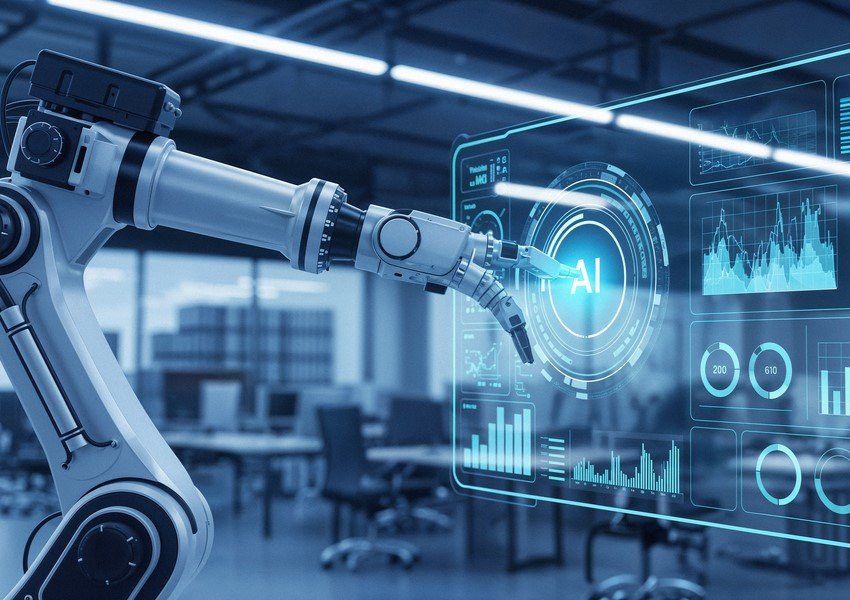
The real value of GPT-5 applications in business becomes evident when examining vertical-specific use cases. Unlike generic automation tools, GPT-5 adapts to industry language, regulations, and workflows.
This contextual intelligence allows organizations to move from automation pilots to enterprise-scale transformation.
Internal link suggestion:
👉 Related article: Robotic Process Automation: 7 Ways to Boost Business Efficiency
GPT-5 in Finance and Banking
Intelligent Financial Reporting
GPT-5 automates:
Monthly and quarterly reports
Regulatory summaries
Variance analysis explanations
Instead of manually interpreting spreadsheets, finance teams receive narrative insights generated in real time.
Fraud Detection and Risk Analysis
When combined with transaction data, GPT-5:
Flags suspicious behavior
Explains anomaly patterns
Assists investigators with contextual summaries
This complements traditional fraud engines with explainable intelligence.
Internal link suggestion:
👉 Related article: AI in Cybersecurity 2025: Predicting and Preventing Threats
Customer Communication Automation
GPT-5 applications in business enable banks to:
Respond to customer inquiries
Explain complex financial products
Draft compliance-approved communications
This reduces call center workload while maintaining regulatory tone.
GPT-5 in Healthcare and Life Sciences
Clinical Documentation and Summarization
GPT-5 assists healthcare providers by:
Summarizing patient records
Drafting clinical notes
Translating medical terminology
This allows clinicians to focus on care rather than paperwork.
Research and Drug Discovery Support
GPT-5 accelerates:
Literature reviews
Hypothesis generation
Trial documentation
While not replacing scientists, it drastically reduces research cycle time.
Internal link suggestion:
👉 Related article: AI in Healthcare: Breakthrough in Early Cancer Detection
Compliance and Patient Data Protection
Healthcare organizations use GPT-5 to:
Interpret compliance requirements
Monitor policy adherence
Assist with audit preparation
This supports both efficiency and patient trust.
GPT-5 in Retail, E-Commerce, and Supply Chain
Personalized Customer Journeys
GPT-5 applications in business enable:
Dynamic product recommendations
Personalized messaging
Intelligent chat-based shopping assistants
Inventory and Demand Forecasting
GPT-5 interprets:
Sales trends
Seasonal patterns
External signals (news, weather, events)
The result is smarter forecasting, not just predictive analytics.
Supplier and Logistics Optimization
By analyzing contracts, delivery reports, and risk data, GPT-5:
Flags supplier risks
Suggests alternative sourcing
Optimizes procurement workflows
Internal link suggestion:
👉 Related article: AI-Powered Marketplaces: Transforming E-Commerce
GPT-5 in Manufacturing and Operations
Operational Intelligence
GPT-5 integrates with operational data to:
Explain performance deviations
Suggest process improvements
Summarize plant-level insights
Predictive Maintenance Support
While IoT sensors detect issues, GPT-5:
Interprets maintenance logs
Explains failure patterns
Recommends preventive actions
This improves uptime and asset longevity.
Workforce Knowledge Retention
GPT-5 captures institutional knowledge by:
Documenting best practices
Answering operational questions
Supporting new employee training
This mitigates skill loss due to workforce turnover.
Governance Frameworks for GPT-5 in Business
Effective governance is essential for scaling GPT-5 applications in business responsibly.
Core Governance Pillars
Transparency
Accountability
Human oversight
Security and privacy
External DoFollow source:
Model Oversight and Auditing
Organizations should:
Log AI decisions
Monitor performance drift
Conduct bias assessments
This ensures trust and regulatory compliance.
Alignment With Global Regulations
GPT-5 governance must align with:
EU AI Act
GDPR
Industry-specific regulations
Internal link suggestion:
👉 Related article: 7 Key Benefits of Blockchain for Business: Securing Transactions and Data
Managing Risks: Bias, Hallucinations, and Over-Automation
Bias and Fairness
GPT-5 reflects training data patterns. Mitigation strategies include:
Diverse datasets
Bias testing
Human review
Hallucination Risk
GPT-5 may generate plausible but incorrect outputs. Best practices:
Grounding responses in verified data
Using retrieval-augmented generation (RAG)
Enforcing confidence thresholds
Over-Automation Risks
Not all processes should be automated. Critical decisions require:
Human validation
Escalation mechanisms
Smarter automation means selective automation, not total autonomy.
Workforce Impact and Change Management
GPT-5 does not eliminate jobs—it redefines roles.
Key workforce shifts:
From execution to supervision
From reporting to analysis
From routine tasks to strategic thinking
Organizations must invest in:
AI literacy training
Change communication
Role redesign
Measuring ROI of GPT-5 Automation
To justify investment, organizations track:
Cost reduction
Time saved
Error reduction
Revenue impact
Effective KPIs include:
Process cycle time
Customer satisfaction
Employee productivity
Compliance incidents
GPT-5 applications in business deliver the highest ROI when aligned with strategic objectives, not isolated tasks.



The Future of GPT-5 Applications in Business
The future of GPT-5 applications in business extends far beyond task automation. GPT-5 represents a shift toward intelligent enterprises, where AI systems continuously analyze, decide, and optimize operations with minimal friction.
In the coming years, GPT-5 will:
Act as a digital decision layer across organizations
Replace fragmented tools with unified AI intelligence
Enable real-time strategy execution
Reduce organizational latency
According to Gartner, by 2028, enterprises using advanced generative AI for automation will outperform competitors by over 25% in operational efficiency.
GPT-5 and the Evolution of Autonomous Enterprises
From Assisted Automation to Autonomous Operations
Today, GPT-5 assists humans. Tomorrow, it will coordinate systems autonomously.
Examples include:
AI-managed procurement cycles
Self-optimizing supply chains
Automated compliance monitoring
Continuous financial forecasting
This evolution creates the autonomous enterprise, where AI handles complexity at scale.
Internal link suggestion:
👉 Related article: Cloud Computing Trends 2025: What Businesses Should Prepare For
Decision Intelligence at Scale
GPT-5 applications in business enable:
Context-aware recommendations
Predictive strategy modeling
Scenario simulation
Executives will increasingly rely on AI-generated insights to guide high-stakes decisions.
GPT-5 Combined With Emerging Technologies
The true power of GPT-5 emerges when combined with other advanced technologies.
GPT-5 + Cloud Computing
Cloud-native GPT-5 deployments allow:
Elastic scaling
Global availability
Faster integration with enterprise systems
GPT-5 + Internet of Things (IoT)
When integrated with IoT, GPT-5 can:
Interpret sensor data
Predict equipment failures
Optimize energy usage
This enables smarter factories, buildings, and cities.
Internal link suggestion:
👉 Related article: Top Smart Home Gadgets 2025: Full Reviews and Recommendations
GPT-5 + Cybersecurity
GPT-5 strengthens cybersecurity by:
Interpreting threat intelligence
Explaining security alerts
Supporting incident response
This creates adaptive, AI-driven defense systems.
Internal link suggestion:
👉 Related article:
Cybersecurity for Enterprises: 7 Strategies to Protect Business Assets
GPT-5 + Blockchain
GPT-5 enhances blockchain systems by:
Explaining smart contracts
Auditing transaction logic
Improving transparency
Building a Strategic GPT-5 Automation Roadmap
Successful GPT-5 adoption requires a structured roadmap.
Phase 1: Foundation and Readiness
Key actions:
Identify high-impact processes
Clean and structure enterprise data
Define AI governance policies
Without a strong foundation, GPT-5 applications in business will fail to scale.
Phase 2: Pilot Programs and Validation
Organizations should:
Start with limited use cases
Measure ROI early
Collect user feedback
Common pilot areas:
Customer support
Reporting automation
Knowledge management
Phase 3: Enterprise-Wide Scaling
Once validated:
Integrate GPT-5 across departments
Automate cross-functional workflows
Establish AI Centers of Excellence
This phase delivers exponential value.
Phase 4: Continuous Optimization
GPT-5 systems must be:
Monitored
Updated
Retrained
AI is not a one-time deployment—it is a living system.
Competitive Advantage Through Smarter Automation
Speed as a Strategic Advantage
GPT-5 reduces:
Decision-making delays
Reporting cycles
Operational bottlenecks
Organizations gain the ability to act faster than competitors.
Cost Efficiency and Scalability
GPT-5 applications in business:
Lower operational costs
Scale without proportional headcount growth
Improve resource allocation
Differentiated Customer Experience
AI-driven personalization enables:
Context-aware interactions
Proactive service
Consistent omnichannel engagement
This leads to higher retention and lifetime value.
Common Mistakes to Avoid When Scaling GPT-5
Treating GPT-5 as a Plug-and-Play Tool
GPT-5 requires:
Strategy
Governance
Human oversight
Without these, automation initiatives stall.
Over-Automating Critical Decisions
Not all decisions should be automated. Businesses must:
Define escalation rules
Maintain human accountability
Smarter automation prioritizes judgment, not blind execution.
Ignoring Workforce Enablement
Employees must understand:
How GPT-5 works
How to collaborate with AI
How roles evolve
Neglecting change management leads to resistance.
GPT-5 as a Long-Term Business Asset
GPT-5 applications in business should be treated as:
Strategic infrastructure
Intellectual capital
Competitive moat
Over time, organizations build:
Proprietary AI workflows
Unique datasets
Institutional AI knowledge
This compounds value and creates defensibility.
Internal link suggestion:
👉 Related article: 7 Ways Digital Transformation Is Shaping Modern Businesses in 2025
Final Conclusion: Executive Action Plan
GPT-5 is not just another automation tool—it is a business transformation engine.
Key Executive Takeaways:
GPT-5 enables smarter automation across all functions
Competitive advantage comes from strategy, not technology alone
Governance and ethics are non-negotiable
Early adopters will define future market leaders
Action Plan for Business Leaders:
Identify high-value automation opportunities
Establish AI governance frameworks
Launch controlled GPT-5 pilots
Invest in workforce transformation
Scale responsibly and continuously optimize
Organizations that act now will not merely adapt to the future—they will shape it.

“With GPT-5, automation becomes more than execution—it becomes strategy, prediction, and partnership.”
– Aires Candido